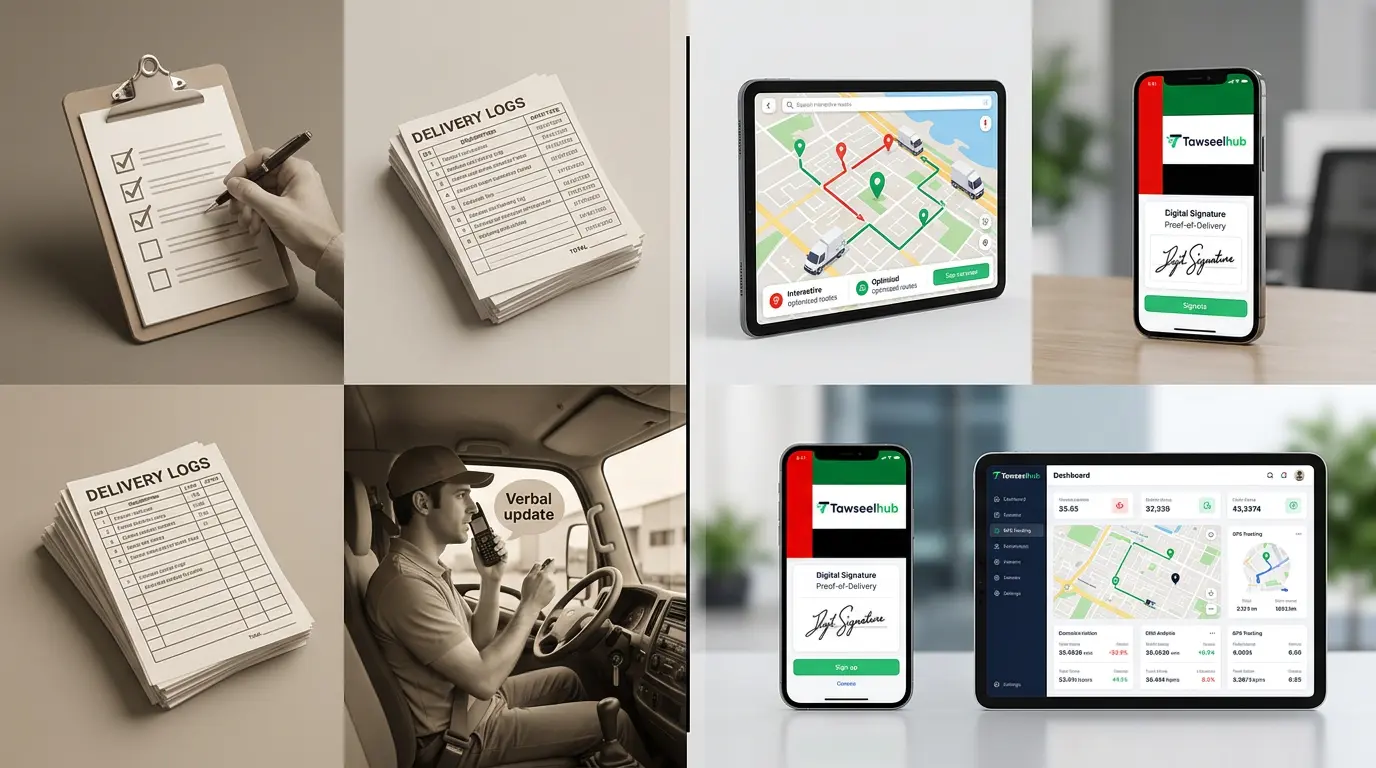
Delivery management software has become a critical differentiator for businesses across the UAE's rapidly evolving e-commerce and logistics landscape. From same-day city courier services to multi-location enterprise operations, the right software can transform operational efficiency, customer satisfaction, and bottom-line results. This comprehensive guide explores what UAE businesses need to know about delivery management software, key considerations for selection, and how to evaluate options against the region's unique operational challenges.
What Is Delivery Management Software?
At its core, delivery management software is a digital platform that helps businesses plan, execute, and track their delivery operations. Unlike basic GPS tracking tools, modern delivery management platforms integrate route optimization, driver coordination, customer communication, and analytics into a single workflow. For UAE businesses operating in markets ranging from retail and food service to B2B logistics, this technology addresses complexities such as traffic variability, temperature-sensitive goods, and customer expectations for real-time updates.
The typical feature set includes:
Route optimization: Algorithms that calculate the most efficient paths considering traffic patterns, delivery windows, and vehicle capacity
Real-time tracking: GPS-enabled visibility for both dispatchers and customers
Driver management: Assignment, performance monitoring, and communication tools
Customer notifications: Automated SMS, email, or app updates at key delivery milestones
Proof of delivery: Digital capture of signatures, photos, or timestamps
Analytics and reporting: Insights into delivery times, costs, exceptions, and performance trends
Why UAE Businesses Are Paying Attention
The United Arab Emirates presents a distinct set of conditions that make delivery management software particularly relevant. Several factors converge to create both opportunities and challenges:
Urban traffic patterns: Cities like Dubai and Abu Dhabi experience significant congestion, particularly during peak hours. Route optimization that accounts for real-time traffic data can reduce delivery times and fuel costs considerably.
Climate considerations: Extreme summer temperatures affect everything from vehicle performance to the handling of temperature-sensitive goods. Software that can flag or manage such constraints is valuable for food and pharmaceutical deliveries.
Regulatory compliance: Businesses must navigate various licensing requirements, labor regulations, and industry-specific standards. Delivery management platforms that include compliance tracking or documentation features can reduce administrative burden.
E-commerce growth: The UAE's e-commerce sector has expanded significantly, with consumers expecting faster, more transparent delivery experiences. Small and medium enterprises particularly benefit from professional-grade delivery operations that can compete with larger players.
Multi-channel selling: Many UAE businesses sell through multiple channels—own websites, marketplaces, and social media platforms. Integrated delivery management that consolidates orders from these sources prevents the logistical confusion that comes with manual coordination.
Key Features to Evaluate
When assessing delivery management software, UAE businesses should prioritize features that address local operational realities rather than generic functionality. Consider the following criteria:
1. Traffic-Aware Routing
Not all route optimization is created equal. Systems that integrate real-time traffic data specific to UAE highways and city streets can significantly outperform those using generic models. Look for platforms that allow customization of avoidance zones, peak-hour restrictions, and alternative route calculations.
2. Temperature and Condition Monitoring
For businesses dealing in fresh produce, pharmaceuticals, or chilled goods, the ability to monitor and record temperature conditions during transit is essential. Some platforms integrate with IoT sensors and provide automated alerts when conditions deviate from specified ranges.
3. Multi-Language and Currency Support
While English is widely used in business, Arabic-language interfaces and customer-facing notifications can improve accessibility for broader demographics. Similarly, if your operations involve international shipping, multi-currency invoicing and tax calculation may be necessary.
4. Scalability for Seasonal Peaks
The UAE experiences significant seasonal variations, including Ramadan operating hours, summer slowdowns in some sectors, and holiday surges in retail. Software that can scale user licenses, route volumes, and reporting features without major reconfiguration is a significant advantage.
5. Integration Capabilities
Most businesses do not operate delivery management in isolation. Compatibility with existing ERP, warehouse management, or e-commerce platforms reduces implementation friction and prevents data silos. Open APIs and pre-built connectors for popular UAE-based and international systems should be verified.
6. Proof-of-Delivery
Digital proof features—photos, customer signatures, barcode scans—are increasingly important for dispute resolution and compliance. Consider whether the system stores data locally or in the cloud, and whether retrieval is straightforward for auditing purposes.

Common Mistakes to Avoid
Based on observations from UAE-based implementations, several pitfalls merit attention:
Overlooking total cost of ownership: Subscription fees are only one component. Implementation, training, integration, and ongoing support costs can substantially exceed the base price. Request detailed quotes that itemize all components.
Choosing based solely on price: The cheapest option often lacks features critical to specific operations, leading to workarounds that negate the efficiency gains the software was meant to provide.
Underestimating change management: Technology alone does not transform operations. Driver adoption, dispatcher training, and workflow adjustments are often the difference between successful and failed implementations.
Ignoring local support: International platforms may offer robust global features but limited local technical support. Consider whether the vendor has a presence in the UAE or reliable regional partners for troubleshooting and updates.
Failing to define success metrics: Without clear key performance indicators—such as target delivery time reductions, cost-per-delivery thresholds, or customer satisfaction scores—it is difficult to measure return on investment after implementation.
Practical Steps for Selection and Implementation
For businesses ready to explore delivery management software, the following process can help ensure a good fit:
Step 1: Audit Current Processes
Document existing delivery workflows, pain points, and metrics. This baseline makes it easier to compare software capabilities against actual needs rather than hypothetical scenarios.
Step 2: Identify Must-Have vs. Nice-to-Have Features
Create a prioritized list. For a same-day courier operation in Dubai, real-time traffic-aware routing and customer notification may be essential. For a B2B furniture delivery company in Abu Dhabi, proof-of-delivery documentation and multi-stop route planning may take precedence.
Step 3: Request Targeted Demos
Share your specific use cases with vendors rather than sitting through generic presentations. Ask how their platform handles UAE-relevant scenarios, such as downtown Dubai traffic constraints or temperature-sensitive pharmaceutical transport.
Step 4: Check References
Contact other UAE businesses that have implemented the software you're considering. Ask about implementation timelines, unexpected challenges, and whether the stated benefits were achieved.
Step 5: Start with a Pilot
Many platforms offer trial periods or limited-scope pilots. Use this opportunity to test with a small team or specific delivery route type before committing to organization-wide deployment.
Step 6: Plan the Transition
Successful implementations allocate sufficient time for data migration, staff training, and workflow adjustments. Rushing this phase often leads to resistance and underutilized features.
Benefits Realized by UAE Businesses
Organizations that successfully implement delivery management software typically report several categories of improvement:
Operational efficiency: Reduced planning time, fewer route errors, and better vehicle utilization can cut operational costs by 10–20% in many cases. For high-volume operations, these savings compound quickly.
Customer experience: Real-time tracking, accurate estimated arrival times, and proactive delay notifications significantly improve the recipient experience. In competitive markets, this can be a meaningful differentiator.
Data-driven decision-making: Historical delivery data reveals patterns that are difficult to discern through manual observation. Businesses can identify optimal driver assignments, seasonal staffing needs, and areas for route network expansion.
Scalability: As order volumes grow, software-based processes can accommodate increases without proportional administrative overhead. This is particularly valuable for businesses experiencing rapid growth or seasonal spikes.
Compliance and accountability: Digital records of deliveries, driver hours, and vehicle usage simplify compliance with labor regulations and provide clear audit trails when needed.
Looking Ahead: Trends Shaping the Region
Several developments are likely to influence delivery management in the UAE over the coming years:
AI-powered optimization: Machine learning algorithms that continuously improve route efficiency based on real-time data and historical patterns are becoming more accessible to mid-market operations.
Electric vehicle integration: As the UAE accelerates its electric vehicle adoption strategies, delivery management platforms are beginning to incorporate battery range, charging station locations, and energy consumption modeling into route planning.
Contactless and autonomous delivery: While still emerging, technologies such as robotic delivery and contactless handoff protocols are being tested in select UAE cities and may become mainstream within 3–5 years.
Enhanced customer control: Advanced platforms are giving recipients more control over delivery windows, rerouting options, and preferred delivery locations, reducing failed delivery attempts and associated costs.
Sustainability tracking: Metrics related to carbon emissions per delivery, fuel consumption optimization, and route consolidation are increasingly important for businesses reporting on environmental, social, and governance (ESG) objectives.
Delivery management software is no longer a luxury reserved for large logistics operators. UAE businesses of various sizes and sectors can realize meaningful improvements in efficiency, customer satisfaction, and cost control through thoughtful selection and implementation. The key is to approach the selection process with a clear understanding of your operational needs, prioritize features that address local conditions, and plan for the people and process changes that accompany any new technology.
Whether you are a growing e-commerce brand seeking to professionalize your delivery promises, a established retailer looking to reduce delivery-related costs, or a B2B service provider aiming to improve coordination across multiple locations, the right delivery management platform can serve as a foundation for operational excellence. By focusing on genuine needs rather than feature fatigue, and by grounding decisions in the specific realities of the UAE market, businesses can make investments that deliver returns well beyond the initial implementation phase.